
Did you know you can visit the home where George Washington grew up in Fredericksburg, Virginia?
Mount Vernon is the estate that gets all the attention, but George Washington’s Ferry Farm ended up being interesting, too, and more importantly completed the picture of the man who would eventually become America’s first president.
I recently spent a week in Virginia, touring some of the state’s many fascinating historic sites with the Virginia Tourism Corporation. As a history buff who loves museums and American history in general, this trip was amazing!
George Washington’s Ferry Farm was our first stop on our itinerary, and it turned out to be one of the biggest surprises of the entire trip.
I expected to enjoy visiting the childhood home of America’s first president, but Ferry Farm is much more than a historic house. The property combines archaeology, history, reconstructed buildings, exhibits, and beautiful views of the Rappahannock River to tell the story of George Washington’s formative years.
If you’re visiting Fredericksburg, especially with kids or anyone interested in American history, I highly recommend adding George Washington’s Ferry Farm to your itinerary. Here is everything you need to know about visiting Ferry Farm.

What Is George Washington’s Ferry Farm?
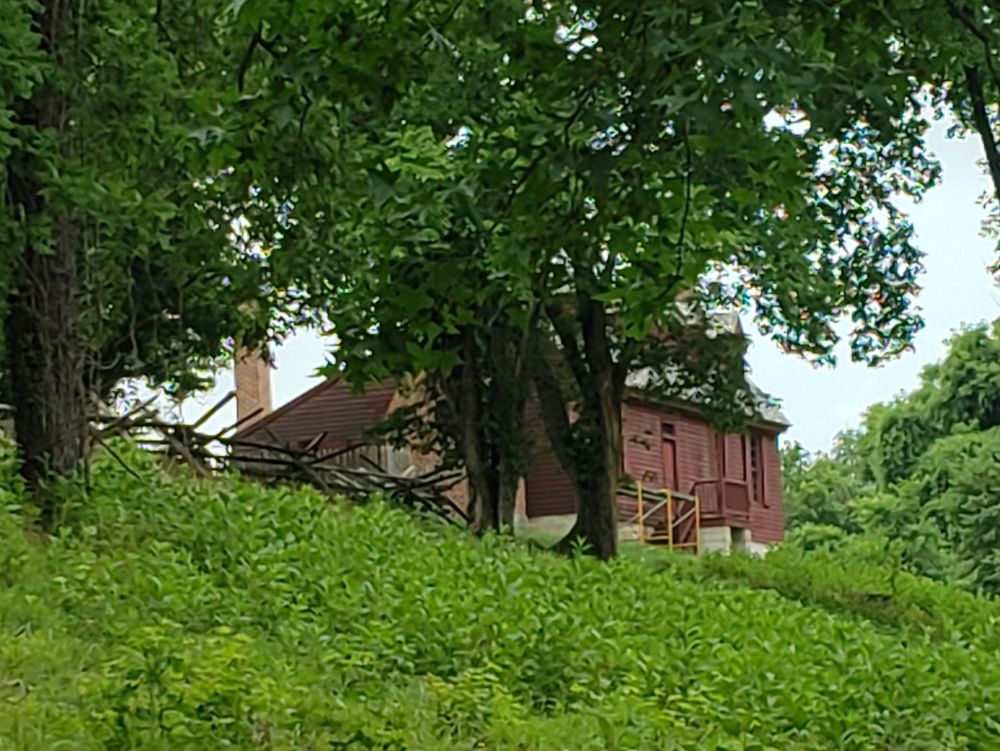
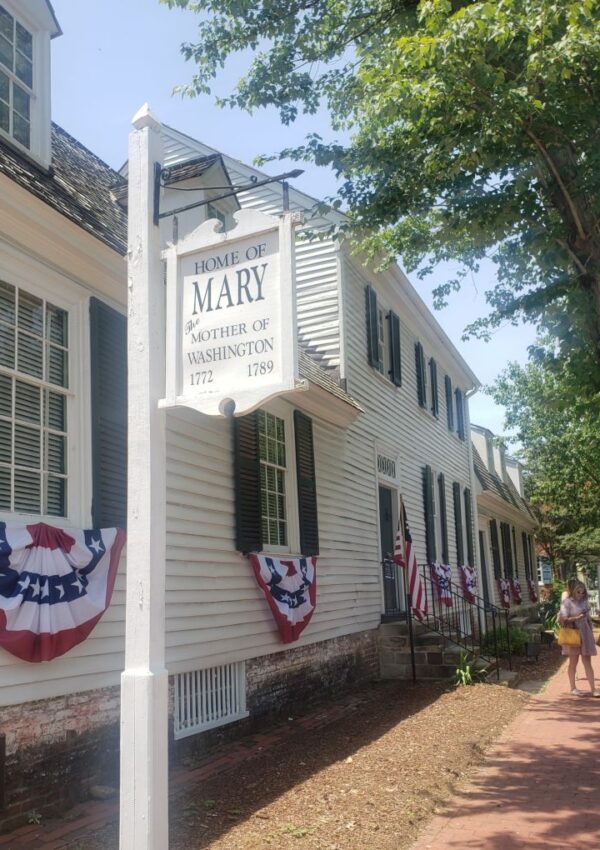
Ferry Farm was the Washington family’s home from 1738 until 1772. George Washington was just six years old when his family moved to the property, and he lived there through his teenage years and into early adulthood. His mother, Mary Washington, lived there for 34 years.
The property sits across the Rappahannock River from Fredericksburg, and the landscape provides an important connection to the story. In Washington’s day, the river was both a transportation route and an important part of the family’s agricultural life.
The site was later known as Ferry Farm because a ferry operated nearby, connecting the area with Fredericksburg, which is located across the river.
Today, visitors can explore the approximately 60-acre property, including a reconstructed Washington family home, archaeological sites, gardens, other historic reconstructions, and a visitor center. Visiting Ferry Farm is one of the best things to do in Fredericksburg, Virginia.
Why Is Ferry Farm Important?
If you are visiting Fredericksburg (or passing through), I highly recommend a stop here. Ferry Farm gives visitors the opportunity to learn about George Washington as a young man rather than simply as the general and first president kids learn about in school.
The property also provides insight into the lives of the other people who lived and worked there, including members of the Washington family and the enslaved people whose labor supported the household and farm.
That broader perspective is important because Ferry Farm isn’t simply telling the story of George Washington. Archaeology and interpretation at the site help tell the stories of the many people who lived on and interacted with the property over time.
Start at the Ferry Farm Visitor Center
I recommend allowing plenty of time for the Visitor Center before or after your tour of the Washington House.
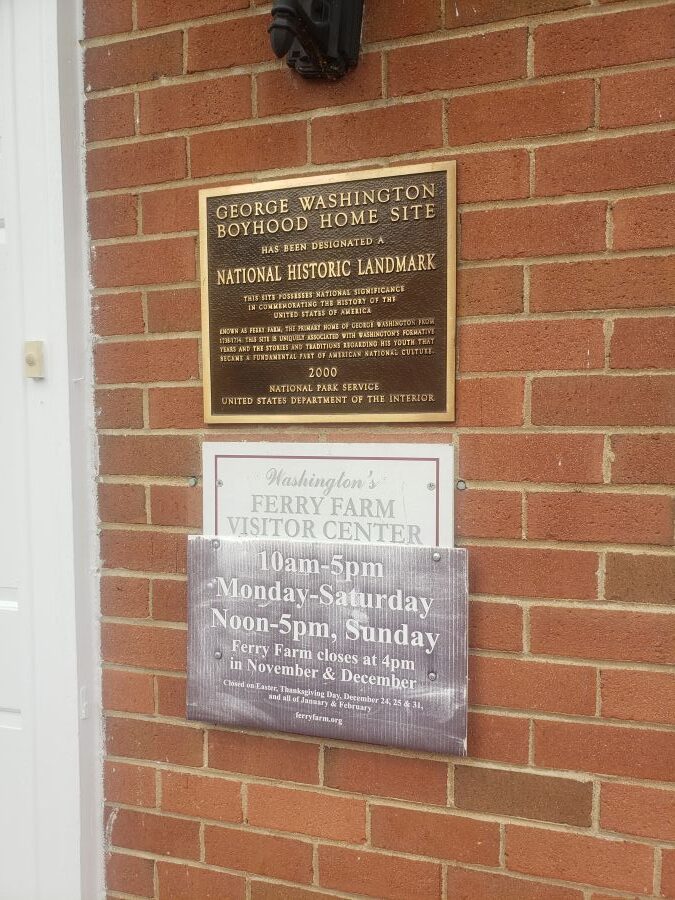
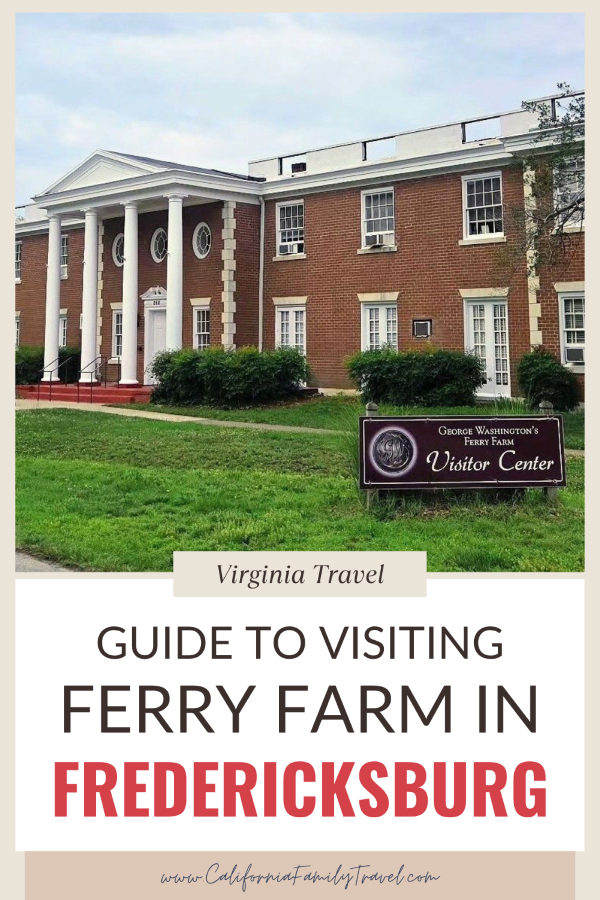
One thing that surprised me (not knowing much about the attraction when I arrived) is that the large brick Visitor Center building (photo above) is not George Washington’s childhood home. With its red-brick exterior, white columns, and Colonial-style architecture, I initially thought it was part of the historic property.
In fact, the building is much newer. It was constructed in the 1960s as the George Washington Boys’ Home, a residential program for teenage boys. After serving several other purposes over the years, the building eventually became Ferry Farm’s Visitor Center.
You need to go through this building though to check in and get to the actual site. The plaque outside even says “George Washington Boyhood Home Site.” It is not the actual house. We will get to that!
Inside the Visitor Center, you’ll find exhibits explaining the extensive archaeological work at Ferry Farm and the fascinating process researchers use to uncover and interpret the site’s history.
One of the major exhibits, The Science of History at Ferry Farm, explores how archaeology, scientific analysis, and historical research have been used together to piece together what life was like for the Washington family and others who lived and worked at Ferry Farm.
The Visitor Center also provides helpful context for what you’re about to see on the property. After learning how archaeologists located the Washington family’s house and used artifacts and other evidence to understand the site, I had a much better appreciation for the reconstructed home and surrounding landscape.
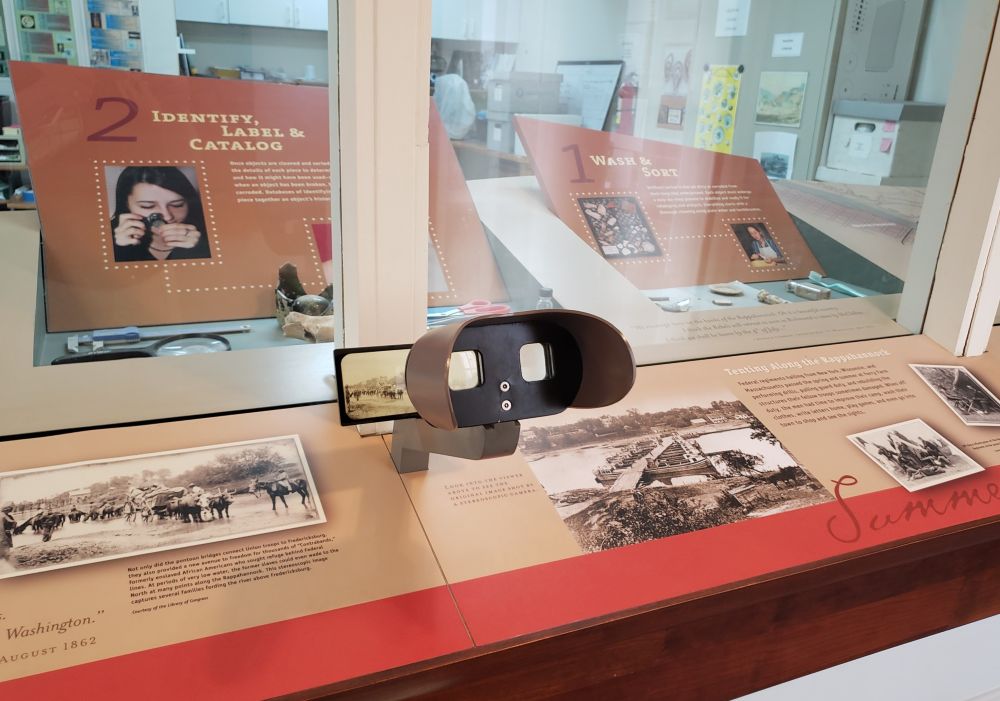
Top Tip: If you are interested in archaeology, history, or the process of reconstructing historic sites, give yourself extra time here. The exhibits help explain not just what you’re seeing at Ferry Farm, but how historians know what they know about the property.
Tour the Washington House
The reconstructed Washington House is the centerpiece of a visit to Ferry Farm.
Although the original house no longer survives, archaeologists were able to determine its location and use the archaeological evidence, historical documents, and other research to recreate the home.
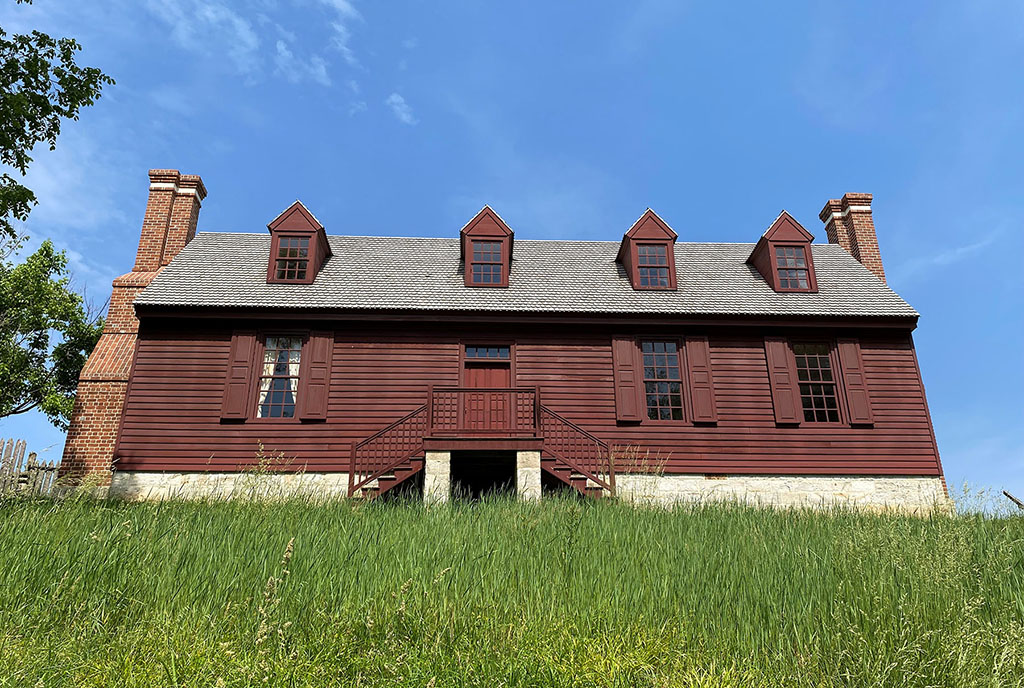
The reconstruction was built using traditional 18th-century construction techniques, with the project taking several years to complete. It opened in 2018.
The interior of the Washington House can only be visited as part of a guided tour. Our tour guide was very friendly and knowledgeable, and the tour took about an hour. The tour provides an opportunity to learn more about Washington’s childhood, his family, and everyday life on the farm.
Inside, the house helps you imagine what life was like for the Washington family during George’s childhood and young adulthood.
The rooms are furnished and interpreted to provide a sense of how the house would have functioned, while guides share stories about Washington and his family.
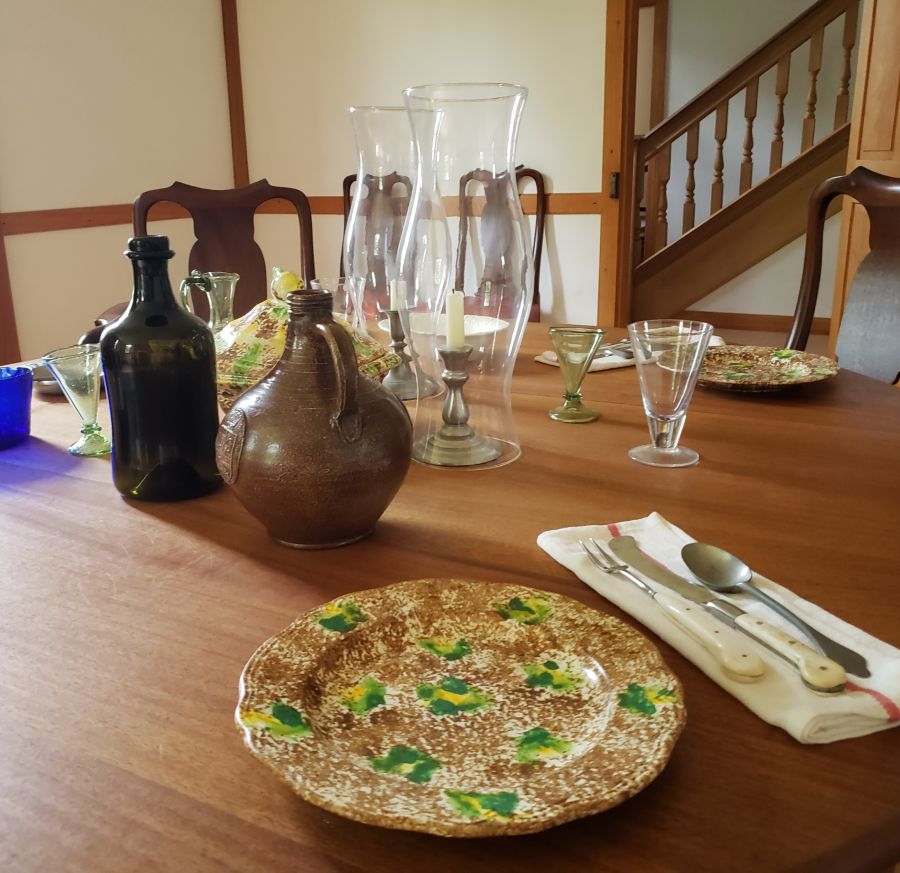
One thing I appreciated about the experience is that the house doesn’t feel like a generic recreation of an 18th-century home. The archaeological discoveries made at this specific property are what informed the reconstruction.
Explore the Outbuildings
One of the things that makes Ferry Farm interesting is that the Washington House isn’t the only reconstructed or interpreted part of the property.
Archaeological research has helped researchers identify the locations and functions of several outbuildings that supported life on the farm.
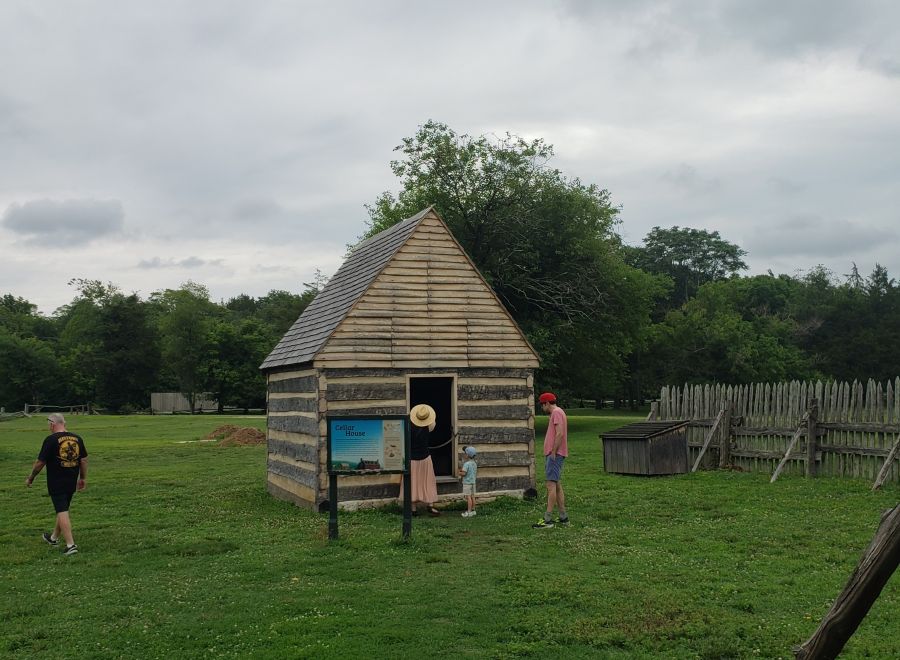
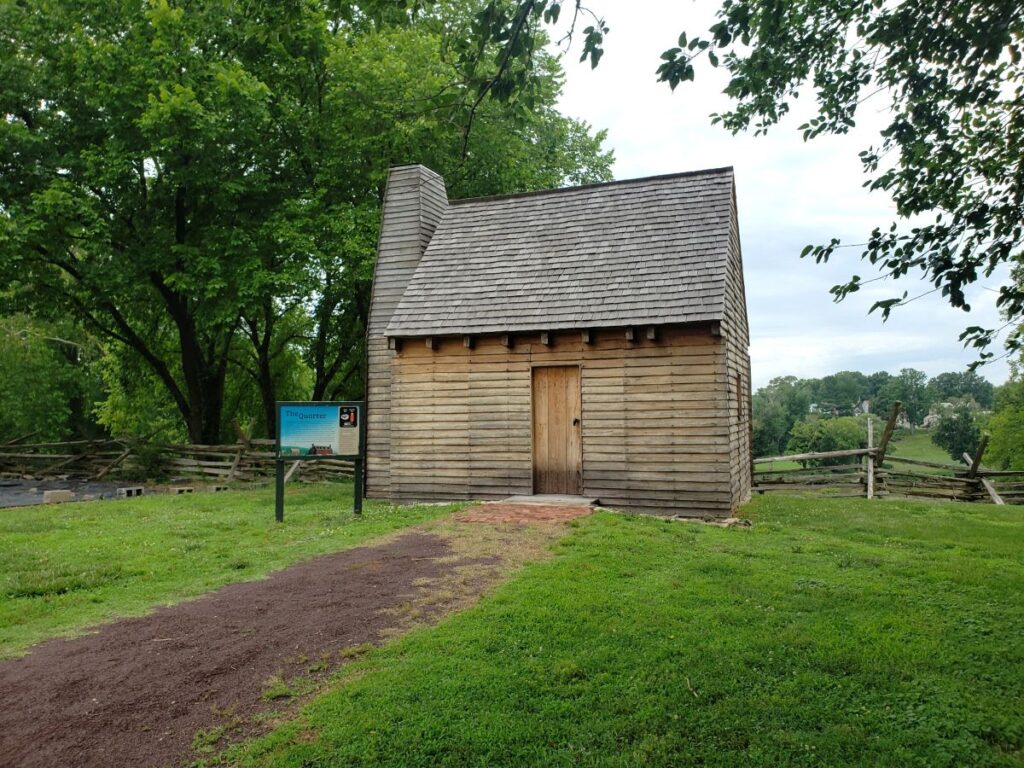
These discoveries include evidence of the Washington family’s kitchen, a cellar house, and a quarter associated with an enslaved family. There are great informational signs next to each building.
Seeing these spaces helps put the Washington House into context. A plantation household in the 18th century wasn’t simply a family living inside one house. Cooking, farming, food storage, domestic work, and other activities took place throughout the property.
The outbuildings also provide an opportunity to learn about the enslaved people whose labor was an essential part of the Washington family’s household and agricultural operation.
Walk the Ferry Farm Grounds
Don’t make the mistake of visiting Ferry Farm and immediately leaving after your house tour.
The property encompasses roughly 60 acres, and walking the grounds adds another dimension to the experience.
Paths lead through the historic landscape and toward the Washington House, while other areas allow visitors to explore additional points of interest.
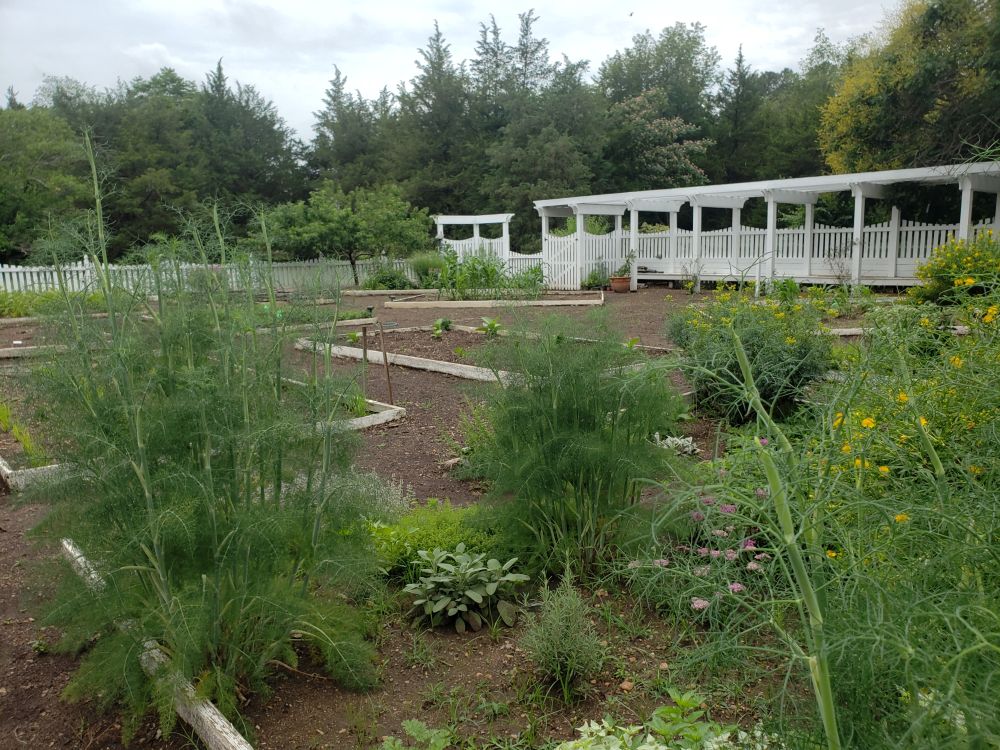
The round-trip walk between the Visitor Center and Washington House is approximately half a mile on a hard-surfaced path without elevation changes. Other areas of the property involve additional walking and some trails with elevation changes.
Comfortable shoes are definitely a good idea.
Top Tip: Be sure to bring water. Especially during warmer months, you’ll appreciate having something to drink while exploring the outdoor areas.
Enjoy the View of the Rappahannock River
One of the most beautiful aspects of Ferry Farm is its location along the Rappahannock River.
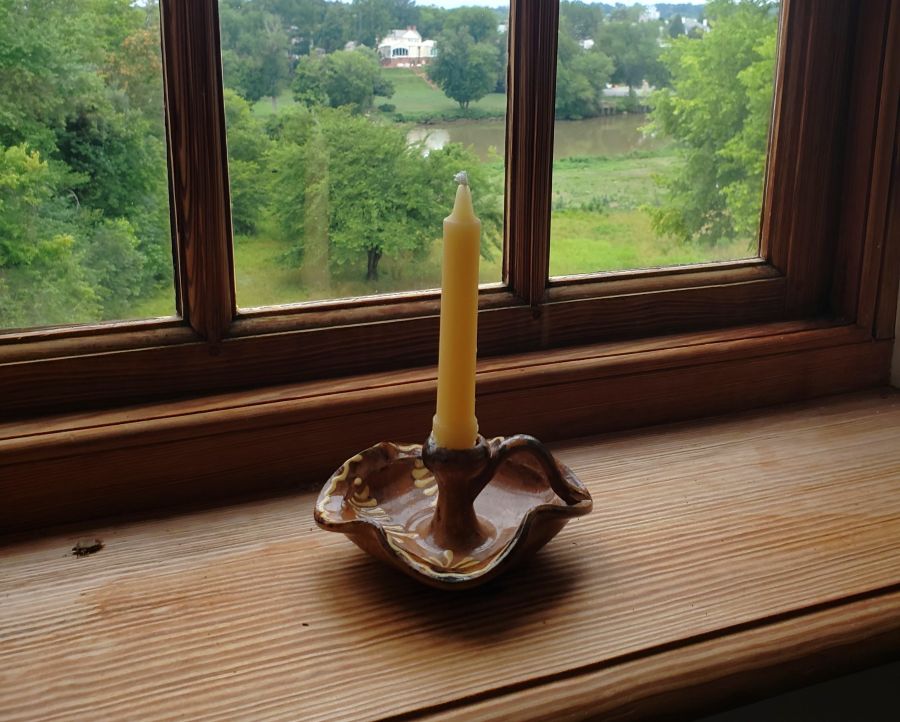
From the property, you can look across toward Fredericksburg and get a better sense of the landscape that shaped life here in the 18th century.
This is a good place to slow down after touring the house and exhibits.
The Archaeology at Ferry Farm
What makes Ferry Farm especially interesting to me is that much of what you see today is the result of decades of archaeological research.
When we visited, archaeological excavations were still underway in several areas of the property, which made the experience feel like history was continuing to unfold right in front of us.
Over the years, archaeologists have uncovered hundreds of thousands of artifacts from the property, including evidence that has helped researchers determine where the Washington family’s home and other buildings once stood.

Archaeological excavation began in earnest at Ferry Farm in 2003 as researchers worked to locate the Washington family’s house and other buildings on the property.
In 2006, archaeologists discovered the remains of a large structure that appeared to be the Washington home. After additional excavation and analysis, the George Washington Foundation announced in 2008 that the foundation was indeed the location of the Washington house.
The Washington House reconstruction that visitors see today was built directly over the archaeological remains of the original home and opened to the public in 2018.
And the archaeology isn’t finished. Knowing that archaeologists are still uncovering pieces of Ferry Farm’s story made the visit particularly fascinating.
More than 800,000 artifacts have been recovered from Ferry Farm since the 1990s, including objects dating back thousands of years before the Washington family lived there.
Important: If you happen to see something that looks like an artifact on the ground, don’t pick it up. The location of an artifact is important to archaeologists, so visitors should notify a staff member instead.
What Can Archaeology Tell Us?
The artifacts discovered at Ferry Farm help researchers understand what daily life was like for the people who lived there.
Archaeology has helped identify the locations of buildings and outbuildings, determine how spaces were used, and provide clues about the people who lived and worked on the farm. Among the discoveries are evidence of the Washington family’s kitchen, a building associated with an enslaved family, and a cellar house used for storing food.
For children, this can be a great way to demonstrate that history isn’t always something that comes from a textbook!
Is George Washington’s Ferry Farm Good for Kids?
Absolutely.
Ferry Farm is particularly well suited to families because it offers several different ways to experience history.
Kids who aren’t especially interested in walking through historic houses may be more engaged by the archaeology, while children who enjoy stories can connect with George Washington’s childhood.
The combination of a reconstructed house, artifacts, archaeological excavation, exhibits, and outdoor space gives families plenty to explore.
The George Washington Foundation also offers educational programs and special family events throughout the year. Programs have included archaeology activities, historical games, and programs specifically designed for younger children.
George Washington’s Ferry Farm vs. Mount Vernon
If you’re visiting both Ferry Farm and Mount Vernon during a Virginia trip, these are both places you’ll want to include on your itinerary! Each attraction provides a very different perspective on George Washington’s life.
Ferry Farm focuses primarily on Washington’s childhood and formative years. The archaeological component is also a major part of the experience.
Mount Vernon offers a much broader look at Washington as an adult, including his life as a plantation owner, military leader, president, and public figure. It also has a fabulous new museum exhibition and movie, and offers a variety of tours.
I wouldn’t choose between the two. If your schedule allows, visiting both definitely gives you a much more complete picture of Washington’s life. I enjoyed both!
Ferry Farm Visitor Information
Address: 268 George Washington Way, Fredericksburg, Virginia
Admission: Ferry Farm requires paid admission to access the grounds. Current admission prices are:
Guided Washington House Tour
Adults $13.00
Students (ages 6 and up) $6.00
Ages 5 and under Free
Self-Guided Grounds Only Tour
Adults $9.00
Students (Ages 6 and up)$4.00
Ages 5 and under Free
Combo Ticket
Includes admission to both Washington House and Kenmore House. Purchase on-site.
Adults$25.00
Students (ages 6 and up) $10.00
Ages 5 and underFree
Ticket prices and tour availability can change, so check the official website before your visit.
Parking: Free parking is available in gravel lots next to the Visitor Center. Ferry Farm is also a stop on the Washington Heritage Museums Trolley Tour.
Time needed: About 90 minutes for a guided house tour and self-guided tour of the grounds.
Accessibility: The reconstructed Washington House is accessible. The path between the Visitor Center and house is approximately 0.5 miles round trip on a hard-surfaced path with no elevation change. Other areas of the property can involve additional walking and elevation changes. And inside the house, there is a second floor you will need to go up stairs to see.
Strollers: Strollers are allowed on the grounds and in other buildings but are not permitted inside the historic house.
Food: There is no food service at Ferry Farm, but you can bring a picnic and enjoy it on the property’s shaded, grassy areas. Food and drinks aren’t permitted inside the historic houses.
For more information and to make reservations, visit kenmore.org/visit-george-washingtons-ferry-farm.
Final Thoughts: Is George Washington’s Ferry Farm Worth Visiting?
Yes – especially if you’re interested in American history.
Ferry Farm was one of the most interesting stops on our Virginia trip because it offered something I wasn’t expecting: the opportunity to see historians and archaeologists actively working to uncover the past.
The reconstructed Washington House brings George Washington’s childhood to life, but the archaeological work is what makes the site particularly compelling. You’re not simply looking at an old building. You’re seeing how researchers used evidence discovered in the ground to determine where the original house stood, what other buildings existed on the property, and what life was like for the people who lived there.
For families, that’s an especially valuable lesson. History isn’t just a collection of dates and famous names. It’s something we continue to discover.
If you’re spending time in Fredericksburg, I highly recommend making the short trip across the Rappahannock River to George Washington’s Ferry Farm. Give yourself enough time to explore beyond the house, visit the Visitor Center, look for archaeological activity, and take in the river views.
It was a great way to begin our Virginia history adventure – and one of the stops I would most recommend adding to a Historic Virginia road trip.
Save This Ferry Farm Review for Later!
Planning a family vacation to Fredericksburg, Virginia? Pin the image below for future reference.
Leave a Reply